1. Root causes are never just one thing
One of the biggest misunderstandings about alopecia is the idea that there is a single root cause.
In reality, hair loss is more like a mountain made of many rocks—big and small. Stress, nutrition, hormones, sleep, inflammation, environment, and emotional load all stack together.
If you only treat one layer, you miss the bigger structure underneath.
Healing requires zooming out and understanding the full system, not just one symptom or one lab value.
2. Not everyone can help you
One of the hardest lessons is realizing that not every practitioner, clinic, or approach is the right fit.
I spent years moving between doctors, specialists, and different systems without real answers. What I learned is simple: titles don’t guarantee outcomes—results do.
Experience, depth of work, and the ability to actually guide someone from A to Z matters far more than credentials alone.
This applies whether you’re dealing with hair loss, hormones, fertility, or any chronic health issue.
3. You have to ask better questions
Progress depends on the quality of your questions.
Instead of asking only “What can I take for this?”, better questions sound like:
- Have you helped people reverse this condition before?
- What testing do you use, and how is it interpreted?
- What is the full step-by-step plan after results come in?
- Are you addressing root causes or just symptoms?
Many people cycle through testing and treatments without a clear interpretation or next step. That creates confusion and delays healing.
Even testing itself varies in quality. Some tests provide limited insight, while others are more actionable. Without clarity, you end up collecting data without direction.
4. Multiple root causes require a strategic approach
Another key realization is that healing is rarely linear.
Even when testing is available, results often show multiple imbalances, not just one issue. That’s why a scattered “try everything” approach rarely works.
What actually works is a structured, guided system that prioritizes what matters most first, then builds from there.
This is also why so many people feel stuck—they are treating pieces instead of the whole system.
5. You cannot help people see what they don’t want to see
This is a difficult truth, especially if you are trying to support a loved one.
Some people are not ready to explore alternatives, even when they are clearly struggling. Others are fully committed to medication-only approaches or quick fixes.
You can offer information, guidance, and support—but you cannot force awareness.
Real change only happens when someone is open to seeing new possibilities.
6. Health is not an expense—it is actually the cheaper path
One of the biggest mindset shifts I had was realizing that investing in health is not a cost—it is prevention of a much higher cost later.
Ignoring health often leads to more doctor visits, more medications, more complications, and more financial strain.
There are even cases where long-term medical expenses become financially devastating for families.
By contrast, investing early in nutrition, lifestyle, and targeted support often reduces long-term physical, emotional, and financial burden.
Health is not just wellness—it is stability.
7. Healing is not a finish line—it is a lifestyle shift
Many people think healing means “fixing the problem” and then returning to old habits.
In reality, healing changes your baseline.
Once I recovered, I didn’t go back to who I was before. My focus shifted to long-term health, aging well, energy, hormones, fertility, and prevention—not just hair.
Even now, I continue refining how I live, eat, think, and support my body.
This is not about perfection. It is about consistency and awareness over time.
Hair health becomes a reflection of overall health—not a separate category.
Final thoughts
Alopecia is often treated as a surface-level issue, but it is actually a full-body signal.
When I look back at my own journey, what changed everything was not one product or one doctor—it was understanding patterns, asking better questions, and building a structured approach to healing.
If you are feeling overwhelmed, confused, or stuck, the next step is not to try more random solutions. It is to step into clarity and structure.
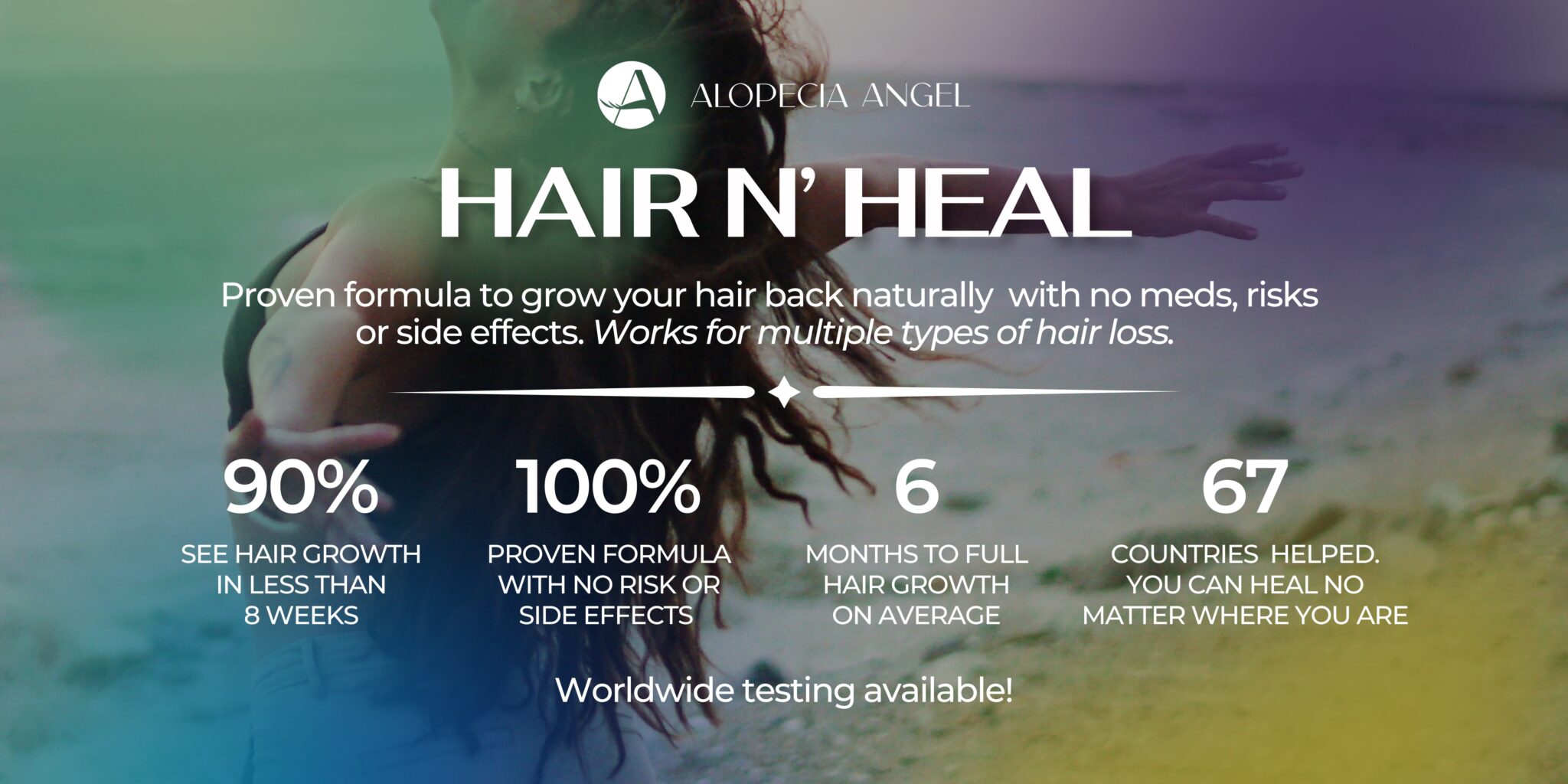
You can learn more resources, stories, and guidance at alopeciaangel.com, including information about the Hair N’ Heal program and upcoming trainings.
Healing is possible, but it requires more than hope—it requires direction.