Today we are going to talk about eight hair myths—common beliefs about hair loss that simply aren’t true. These are things people have told you, things doctors may have told you, and things society has repeated so often that they start to sound like facts.
But they are not facts. They are myths.
Let’s go through them one by one.
Myth 1: Hair Loss Is Because of Your Age
This is one of the most common myths.
We often hear that hair loss is simply a part of aging. But that is not the full truth.
Yes, the body changes as we age. But aging does not automatically mean hair loss, poor health, or decline.
Aging is not passive—it is influenced by how we live.
Think of it like a car. A well-maintained older car can run better than a neglected new one. The difference is maintenance.
Your body works the same way. Diet, lifestyle, habits, stress levels, and daily choices all influence how you age.
Hair loss is not caused by age itself. It is influenced by how your body is functioning over time.
Myth 2: Coloring Your Hair Causes Hair Loss
Another common belief is that hair dye alone causes alopecia.
While hair dyes do contain chemicals, coloring your hair is not the root cause of autoimmune hair loss.
Many people—including myself—have colored their hair while experiencing alopecia.
Yes, dyes can be harsh and should be used carefully, but hair loss is not simply caused by highlights or coloring.
If it were that simple, everyone who colors their hair would experience alopecia—and that is not the case.
Myth 3: Topical Treatments Alone Can Heal Alopecia
This is one of the biggest misconceptions.
Many people believe shampoos, serums, oils, laser caps, or topical medications are enough to reverse hair loss.
But topical solutions alone do not address the internal root causes of alopecia.
This is why many people try:
- Minoxidil
- Steroid creams or injections
- Hair growth shampoos
- Laser devices
…and still do not see lasting results.
Even when temporary changes occur, they often do not last because the underlying imbalance is not addressed.
Hair loss is not a surface-level issue. It is a whole-body condition.
Myth 4: Only Certain People Can Heal Alopecia
There is a belief that hair loss recovery only works for “some people.”
That is not true.
Healing is not reserved for a specific age, race, or type of alopecia.
What often happens is that people try quick fixes that are not designed for long-term healing. When those fail, they assume healing is not possible.
But when the approach is comprehensive and consistent, results become possible for many different types of hair loss.
The idea that “only some people can heal” is a limitation—not a fact.
Myth 5: If You’ve Had Hair Loss for Years, It’s Too Late to Heal
Another major myth is that time determines your ability to recover.
People often say:
- “I’ve had it for 10 years”
- “I’ve had it for decades”
- “It’s too late for me”
But this is not true.
The body is always capable of change when given the right conditions.
I’ve seen clients with long-term alopecia experience progress once they addressed underlying imbalances and committed to a structured approach.
The length of time does not determine your potential for healing. Your actions today do.
Myth 6: Diet Has Nothing to Do With Hair Growth
Some people are told that diet is irrelevant to hair loss.
This is incorrect.
While diet is not the only factor, it is an important foundation of overall health.
Your body builds everything—including hair—from nutrients.
However, diet alone is also not enough. Hair health is influenced by multiple interconnected systems, including:
- Stress
- Hormones
- Digestion
- Inflammation
- Lifestyle patterns
Focusing on only one area misses the bigger picture.
Myth 7: You Have No Control Over Your Hair Loss
Many people feel powerless when dealing with alopecia.
But the truth is, there are many areas within your control:
- Lifestyle habits
- Stress management
- Nutrition
- Sleep
- Daily choices
While you cannot control everything, you can influence a significant portion of your health outcomes.
Feeling out of control is common—but it is not the full reality.
You have more influence than you think.
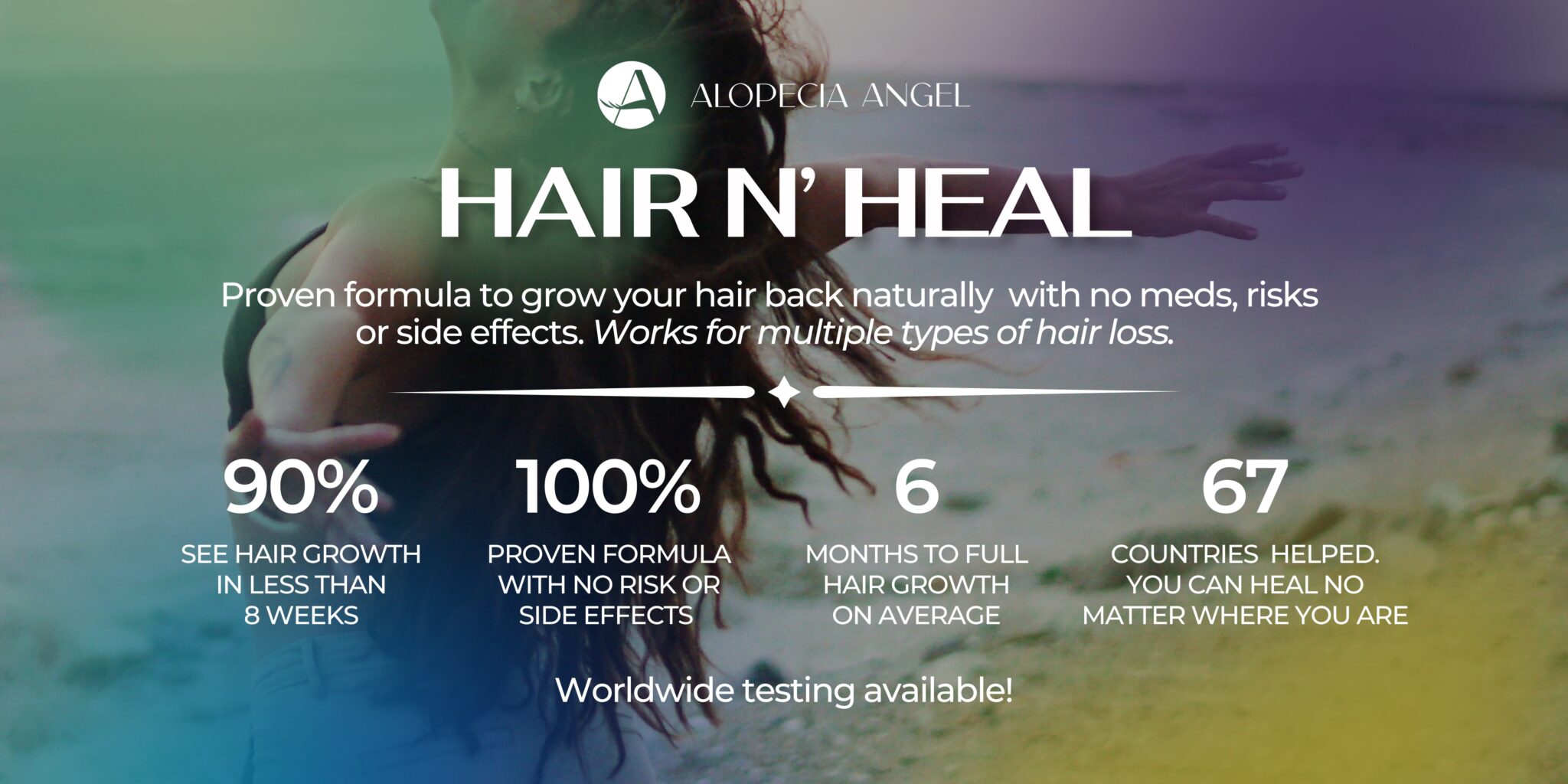
Myth 8: The Hair and Heal Program (or Any Structured Approach) Won’t Work for You
A common belief is: “This won’t work for me.”
But structured programs are not magic—they work when you participate in them.
Think of it like driving.
You are in the driver’s seat. The system gives you directions, but you still need to follow them.
When someone commits, follows the process, and stays consistent, results become possible.
It is not about whether healing is “for you.”
It is about whether you are willing to take the steps.
Breaking Free From Myths
These myths create confusion, fear, and limitations around healing alopecia.
But once you remove them, a different truth becomes visible:
Hair loss is complex—but not hopeless.
Healing is possible when you understand what actually contributes to it and stop relying on misinformation or oversimplified answers.
The most important shift is realizing this:
You are not limited by age, time, or circumstance—you are influenced by your choices, your awareness, and your willingness to take action.