The million-dollar question I’m asked all the time is this: Is there a cure for alopecia?
If you search online or ask most medical professionals, the answer is usually the same—no, there is no cure.
But I want to offer a different perspective.
There may not be a single “cure” in the form of a pill or injection, but there is absolutely a path to healing. And that distinction matters.
Why the “Cure” People Look For Doesn’t Exist
When most people think of a cure, they imagine something simple:
- One medication
- One cream
- One treatment
- One universal solution for everyone
That’s what conventional medicine often aims for—a standardized solution that works across populations.
But alopecia doesn’t behave like that.
And this is where many approaches fall short.
The Problem With One-Size-Fits-All Treatment
Much of the conventional approach to alopecia focuses on pharmaceuticals and symptom management. These may include:
- Steroid injections
- Topical creams
- Oral medications
- Experimental treatments
- Allergy or immune-modulating drugs
In many cases, these treatments offer only temporary changes—if any—while also carrying potential side effects that can impact other systems of the body.
From my own experience, and from working with clients, I’ve seen a repeated pattern: treatments that don’t address the root cause often lead to frustration, not resolution.
Hair may briefly improve, or not at all, while underlying imbalance continues.
Alopecia Is Not One Condition With One Cause
One of the biggest misconceptions is treating alopecia as a single, uniform disease.
In reality, alopecia is more like a complex puzzle.
Think of it as thousands of interconnected pieces, including:
- Nutrition and diet
- Stress and nervous system regulation
- Hormonal balance
- Gut and digestive health
- Environmental triggers
- Immune system function
- Lifestyle factors
When one or more of these pieces are out of balance, hair loss can appear.
This is why a single solution rarely works.
Healing Is Personal, Not Standardized
A key truth often missed in conventional treatment is this:
Alopecia healing is highly individual.
What works for one person may not work for another because no two bodies are identical.
Age, lifestyle, medical history, environment, and internal health all matter.
This is why a personalized, whole-body approach is necessary rather than a universal prescription.
Can Alopecia Be Reversed?
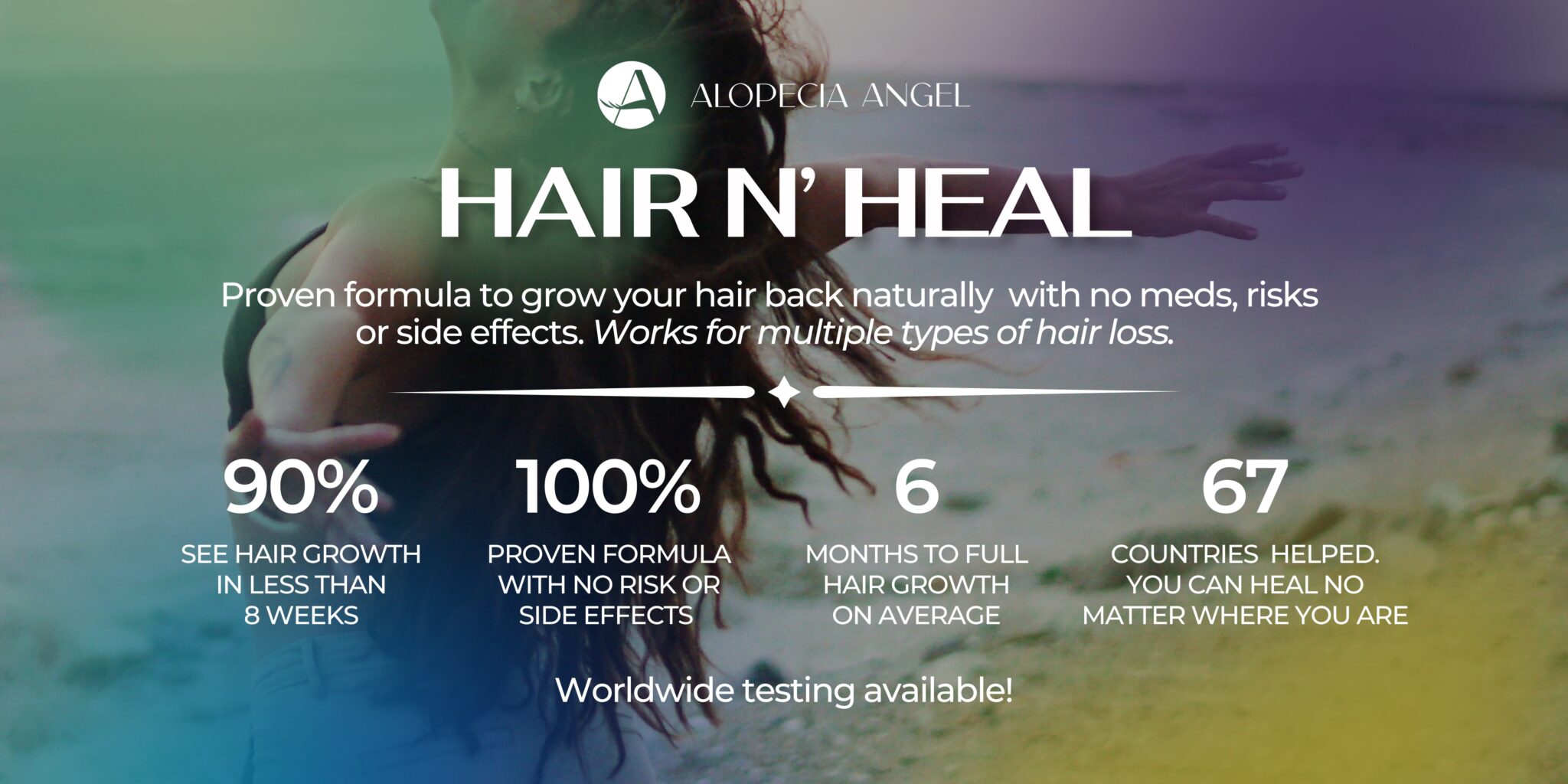
From my experience and the work I’ve done with clients across multiple countries, the answer is yes—healing and reversal are possible.
I’ve seen:
- Adults regrow hair after long-term loss
- Children recover hair health
- Clients experience improvements beyond hair, including energy and overall wellness
But it requires more than hope or a single intervention.
It requires consistency, awareness, and a willingness to address the full picture of health.
My Own Experience With Healing
I speak about this not only as a practitioner, but as someone who has personally gone through alopecia.
I’ve experienced:
- Hair loss episodes
- Medical treatments that didn’t resolve the issue long-term
- The emotional and physical toll of uncertainty
And I’ve also experienced full recovery—more than seven years alopecia-free, including through major life stages such as postpartum changes and stress-related events.
That experience shaped my belief that healing is possible, but not through a one-step solution.
Why Natural and Holistic Approaches Matter
When the body is out of balance, adding more suppression (through medication alone) doesn’t always resolve the root issue.
A holistic approach focuses on:
- Rebalancing internal systems
- Supporting the body’s natural functions
- Identifying triggers rather than masking symptoms
- Restoring overall health, not just hair
This is where meaningful, lasting change tends to happen.
The Role of Choice and Commitment
Healing alopecia is not passive.
It is a process that requires participation.
Much like:
- Training for a marathon
- Studying for a degree
- Building physical strength
- Learning a new skill
Results come from action, consistency, and direction—not shortcuts.
There is no “instant fix,” but there is a path.
Why Diagnosis Alone Isn’t the Full Story
A diagnosis can feel final, but it does not always define what is possible.
Whether someone is told they have:
- Alopecia areata
- Androgenetic alopecia
- Traction alopecia
- Telogen effluvium
- Or scarring alopecia
…it is still important to look deeper at what is driving the condition.
A label alone does not explain the full picture.
The Real Question Isn’t “Is There a Cure?”
A more useful question might be:
What does my body need to return to balance?
Because when the body regains balance, the conditions that contribute to hair loss often begin to shift.
This is where real change becomes possible.
Final Thoughts
So, is there a cure for alopecia?
If we are defining “cure” as a single pill or universal treatment, then no—that doesn’t exist.
But if we define healing as:
- Restoring balance
- Addressing root causes
- Supporting the body holistically
- Achieving lasting hair regrowth and stability
Then yes, healing is absolutely possible.
The path is not identical for everyone, but the possibility is there for everyone.
And the most important step is deciding to begin.