Understanding Alopecia
If you have hair loss, you have alopecia. Alopecia is the medical term for hair loss. Under this umbrella, there are many types including postpartum hair loss, telogen effluvium, diffuse thinning, androgenic or female pattern hair loss, hormonal and thyroid-related hair loss, menopause-related hair loss, and autoimmune forms such as alopecia areata, totalis, and universalis.
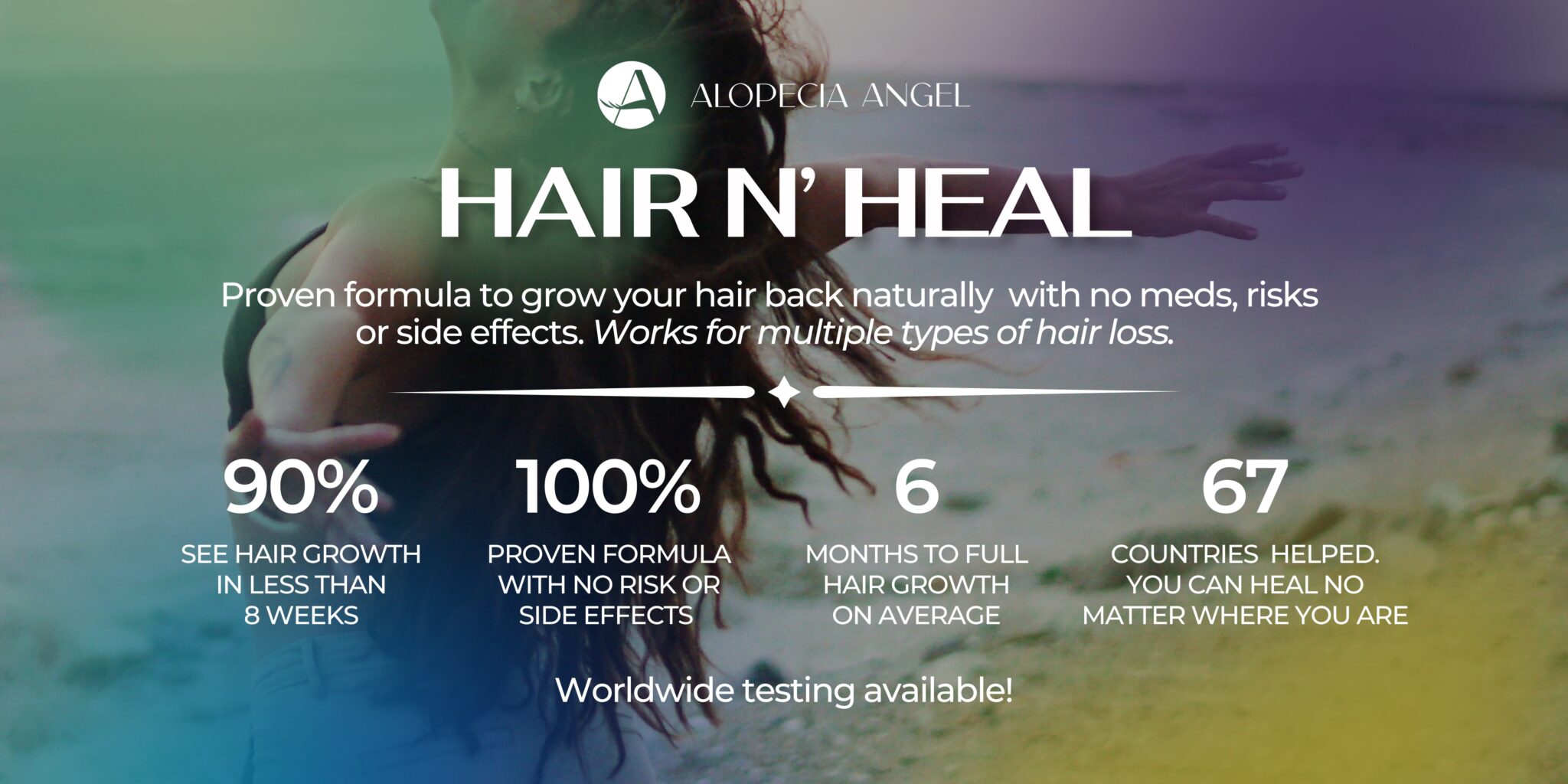
Whatever type of hair loss you have, it is often possible to support healing and regrowth. Even in more complex cases such as scarring alopecia, I have seen improvement in clients. Every case is unique, and results depend on individual factors.
When the right approach is taken, many people begin to see reduced shedding within weeks.
What I Wish I Knew About Healing Alopecia
1. Root Causes Are Never Just One Thing
One of the biggest misconceptions about alopecia is that there is a single root cause. In reality, it is always a combination of factors.
Think of it like a mountain made of many rocks. There may be a few large boulders, but there are also medium and small rocks that all contribute to the overall picture. Healing requires addressing all of these layers, not just one.
In over 8 years of working with thousands of clients worldwide, I have never seen hair loss come down to just one factor.
2. Diet Alone Is Not Enough
Diet plays an important role in health and hair, but it is not the only factor. It does not work in isolation.
Even high-performance athletes understand that results come from multiple inputs, not just nutrition alone. The same applies to hair health. Diet is one piece of a much larger system.
3. Not Everyone Can Help You
One of the hardest lessons I learned is that not every practitioner will be able to help you, even if they are highly trained.
I have personally worked with many types of practitioners—medical doctors, functional medicine doctors, naturopaths, Ayurvedic practitioners, chiropractors, and others. Many provided limited results or only temporary solutions.
At times, I was told everything was “normal,” even when I clearly felt something was wrong.
Real healing required going beyond standard approaches and looking at the full picture of health.
4. Better Questions Matter
Looking back, I wish I had asked more direct and specific questions earlier in my journey, such as:
- Do you have real results or case studies?
- What types of alopecia have you helped reverse?
- What testing do you use?
- What happens after the test results?
Testing alone is not enough. What matters most is the interpretation and the protocol that follows.
Without the right next steps, even good testing can fall short.
5. Healing Is Far More Than Hair
One of the most important truths I learned is that healing alopecia is not just about hair regrowth.
It is a full transformation—mental, emotional, physical, and even spiritual. It changes how you see yourself and how you move through life.
Many people realize that what they gain through healing goes far beyond appearance. It becomes clarity, confidence, and overall wellbeing.
6. You Have to Take Action
No one can do the work for you. You can be guided and supported, but action must come from you.
Just like weight loss or fitness, consistency is what creates results. Healing requires commitment and follow-through over time.
Even small, consistent steps matter.
Healing Is a Process, Not a Single Event
Healing alopecia is not linear. It takes awareness, commitment, and willingness to take action. But it is absolutely possible.
Beyond hair growth, many people experience improved energy, clarity, and overall health. It becomes a full life shift, not just a physical change.
You have the ability to decide your path. Support can guide you, but you are the one who moves forward.
If you want more information, you can visit alopeciaangel.com, and explore free resources.
Thank you for reading.