This topic is one that really goes to my heart because I am a mom. And for many of you listening, you are parents too. So this conversation touches not just hair loss, but something much bigger: the health of our children and the direction things are going.
I’ve been seeing more and more autoimmune cases in children over the years. Not just adults, but children. In fact, in many cases, I’m seeing it earlier and earlier. What used to show up mostly in adulthood is now appearing in kids as young as five or six. That includes alopecia areata, totalis, and universalis.
In children, I mainly focus on alopecia areata, totalis, and universalis. In adult women, I work with all types of hair loss. And in men, I also focus on alopecia areata, totalis, and universalis.
What I often hear from parents is, “My child is doing fine, they’re adjusting, they’re learning to be brave, they’re accepting it.” And I understand that perspective. There is strength in acceptance. But acceptance alone cannot be the final step.
Because what we also have to recognize is that alopecia in children is not just a cosmetic issue. It can be a signal of something deeper. And when left unaddressed, it can potentially open the door to additional autoimmune conditions later on in life.
I’ve seen children with multiple autoimmune diseases at very young ages—sometimes two, three, even four conditions already present. And that is what makes this more than just hair loss. It’s a systems issue in the body.
Understanding what’s happening in the body
A simple way to think about this is like a leak in the roof of a house. You can acknowledge the leak, you can accept that it’s there, but you still have to take action. Because if you don’t, the water doesn’t stay in one place. It spreads. It damages more areas. It creates a bigger problem over time.
It’s the same with autoimmune conditions. Hair loss is often one of the earliest visible signs that something in the body needs support.
Autoimmune conditions include things like lupus, Hashimoto’s, Graves’ disease, rheumatoid arthritis, multiple sclerosis, psoriasis, eczema, vitiligo, and many others. These conditions reflect immune system dysregulation, where the body is essentially turning against itself in different ways.
A lot of this expression is connected to genetics, but genetics are not destiny. Genes can be turned on or off depending on environment, stressors, nutrition, lifestyle, and other internal and external influences.
This is why I also talk about DNA-based insights and functional testing. Because understanding how a child’s body is predisposed can help guide more personalized support rather than guessing.
Rising trends in children’s health
I recently came across research shared by Dr. Anne Shippy that highlights a broader concern: chronic disease in children has been rising across multiple categories since the 1990s.
For example, childhood diabetes has increased significantly over the last few decades. Autism spectrum diagnoses have risen from about 1 in 150 children in 2000 to around 1 in 31 in 2022. Childhood obesity has also increased dramatically, with millions more children affected compared to previous generations. ADHD diagnoses have also steadily increased over time, now affecting a significant percentage of children and adolescents.
There is also a deeply concerning rise in childhood cancers. Today, cancer remains one of the leading causes of disease-related death in children in the United States. These are not small shifts. These are major generational changes in health outcomes.
When you look at all of this together, it becomes clear that children’s health is changing rapidly, and not in a positive direction.
From my perspective, a large part of this is connected to diet, lifestyle, environmental exposures, and chronic stress on the body. These are not the only factors, but they are significant and they are modifiable.
Why the family environment matters
And this is where I want to bring it back to family systems. Because when a child is unwell, it is rarely just about the child alone. The environment they live in matters. What the family eats, how they live, what is normalized at home, what is available, all of it plays a role.
I’ve worked with families where the child had hair loss or autoimmune symptoms, and once we began looking at the full household—not just the child—the progress became much more meaningful. Because support has to be consistent across the environment.
What I also see often is convenience culture taking over. Highly processed foods, frequent snacks, sugar exposure, and constant “quick fixes” have become normal. And while this is common, it does not mean it is neutral for health.
Even in my own experience, I was not overweight or unhealthy when I was diagnosed with alopecia. I was active, fit, and doing everything I thought was “right.” And still, my body went through a major autoimmune response.
That experience taught me something important: health is not just external. It is internal, systemic, and multifactorial.
Hair loss is often just the visible signal. The real work is understanding what is happening underneath.
What healing really involves
When I see children with hair loss today, I don’t just see hair. I think about immune balance, gut health, nutrient status, inflammation, and environmental triggers. Because that is often where the root issues lie.
And I also want to be clear about something: this is not about blame. It is about awareness and empowerment. The goal is not to judge parents or children. The goal is to understand what can be done differently moving forward.
Because there are options beyond simply “accepting it” or suppressing symptoms. There are ways to support the body more deeply through nutrition, lifestyle changes, and individualized care.
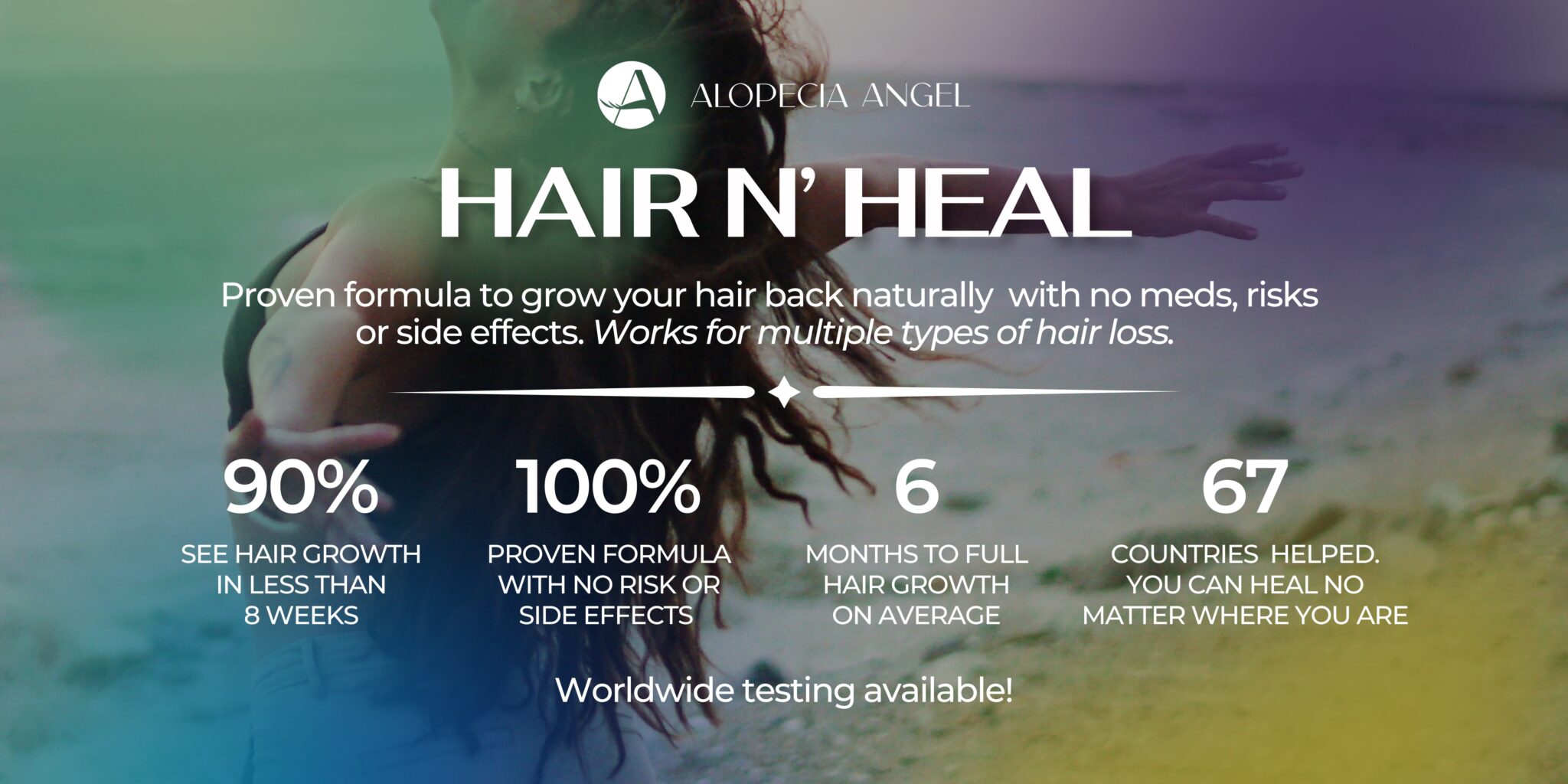
This is what I focus on in the Hair N’ Heal approach—looking at the whole person, not just the symptom. And in many cases, when the body is supported properly, we see changes not only in hair, but in energy, digestion, skin, and overall wellbeing.
Children especially are responsive because their systems are still developing. That also means early intervention matters.
Final thoughts
If you are a parent listening to this and you are dealing with hair loss or autoimmune concerns in your child, I encourage you to look deeper rather than waiting it out. Because early support can make a meaningful difference in long-term outcomes.
If you want guidance, we offer free consultations, free training, and resources through Alopecia Angel. You can reach out anytime at hello@alopeciaangel.com.
At the end of the day, the message I want to leave you with is this: hair loss is not just about hair. It is a reflection of internal health. And when we support the body as a whole—especially early—we give it a much better chance to restore balance and thrive.