Today, we’ll be talking about autoimmune diseases 101. Sometimes I see people with full-on alopecia areata, totalis, or universalis, which are all autoimmune hair loss types. Alopecia areata typically shows up as bald patches, sometimes starting in the beard or scalp, and it can progress. Eyebrows and eyelashes can be affected as well. In more advanced cases like totalis or universalis, it can lead to full body hair loss.
This can happen in women, children, and men of any age, race, or ethnicity. This is what I personally experienced—I had alopecia areata, and this is how Alopecia Angel was born.
However, through my work, I also support women with other types of alopecia, including female pattern baldness. What I often find is that there is also an underlying autoimmune condition present. This could include IBS, Crohn’s, eczema, psoriasis, lupus, MS (multiple sclerosis), rheumatoid arthritis, or even multiple autoimmune conditions at the same time.
So I wanted to give you a snapshot of what autoimmune disease can look like, because you may have one and not even realize it.
Why autoimmune disease is often missed
Autoimmune conditions are often difficult to diagnose. In many cases, it takes years and multiple doctors before someone gets clarity. Even conditions like Hashimoto’s or Graves’ disease aren’t always immediately identified as autoimmune in nature.
Unfortunately, many practitioners don’t immediately consider autoimmunity as the root cause. This can leave people feeling confused or even dismissed, while continuing to search for answers. In the meantime, valuable time and energy are lost—not because nothing is wrong, but because healing has not yet begun.
What autoimmune disease actually is
Autoimmune disease happens when the immune system mistakenly attacks the body’s own tissues, causing chronic inflammation.
For example:
- In alopecia, the immune system targets hair follicles
- In Hashimoto’s, it targets the thyroid
- In multiple sclerosis, it affects nerves and mobility
- In rheumatoid arthritis, it targets joints
There are over 100 known autoimmune conditions, including Hashimoto’s, lupus, MS, psoriasis, celiac disease, and many more.
How common autoimmune conditions are
Autoimmune disease affects over 50 million Americans, and millions more worldwide. Alopecia alone affects an estimated 8 million people globally, with millions more across the UK, Europe, and Australia.
Women are about four times more likely than men to develop autoimmune conditions.
Even more important, once someone has one autoimmune condition, about 25% go on to develop a second or third. I’ve seen this even in children as young as six, as well as adults in their 40s and 50s. Autoimmunity does not discriminate by age, gender, or background.
Among the top causes of death in women under 65 are autoimmune-related conditions.
Rates are also rising due to factors such as toxins, infections, gut imbalances, chronic stress, and nutrient deficiencies. The encouraging part is that many of these factors can be addressed and supported through lifestyle changes.
Signs you may have an autoimmune condition
Some common symptoms include:
- Hair loss
- Brittle nails
- Chronic fatigue that doesn’t improve with rest
- Brain fog or difficulty concentrating
- Unexplained weight changes
- Digestive issues (bloating, diarrhea, constipation)
- Muscle weakness or pain
- Numbness or tingling in hands or feet
- Frequent infections or slow recovery
- Joint pain, stiffness, or swelling
- Skin rashes or changes in skin texture or color
- Mood changes such as anxiety, irritability, or depression
- Food sensitivities or allergy-like symptoms
- Temperature sensitivity (feeling too hot or too cold)
This is just a snapshot, but if several of these apply to you, it may be worth looking deeper.
What to do if you suspect autoimmunity
The first step is understanding what is actually going on in your body. This often involves identifying triggers and aggravators such as infections, allergies, diet, stress, toxins, and histamine responses.
This is why a personalized approach is so important. No two people have the exact same root causes, even if they share the same diagnosis.
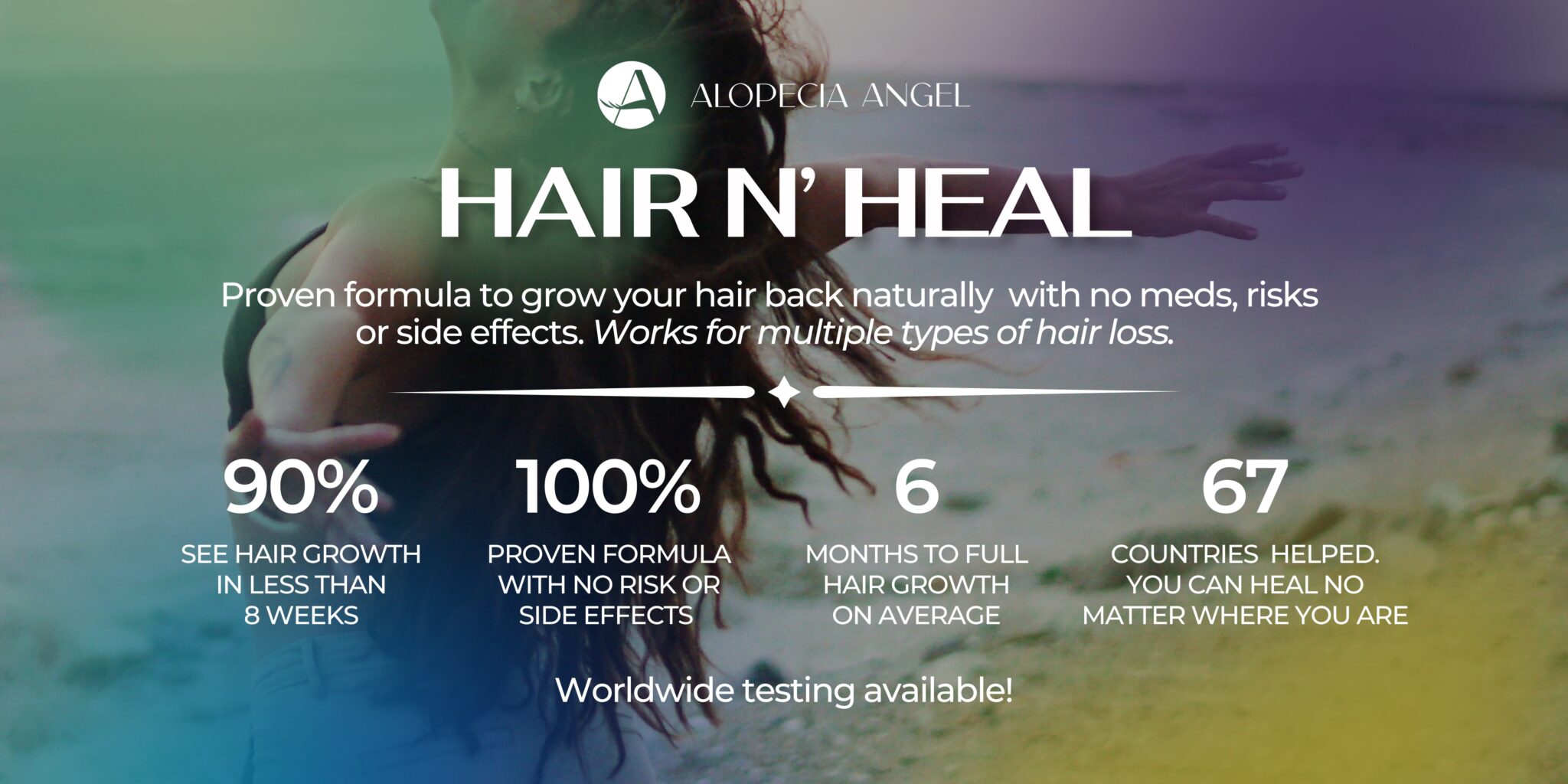
Inside the Hair N’ Heal program, this is exactly what we focus on—addressing the underlying drivers so the body can move toward balance and healing.
In my experience, when the root causes are properly addressed, many clients begin seeing changes in hair growth within weeks, sometimes as early as week one to six, depending on the case.
Why personalization matters
One of the biggest lessons I’ve learned is that health is never one-size-fits-all.
If you put 100 people in a room with the same diagnosis, their triggers, lifestyle factors, and underlying imbalances will all look different.
This is also why I chose a natural, root-cause approach in my own healing journey. I wanted to understand the body rather than suppress symptoms. That decision not only supported my fertility and long-term health, but also allowed me to remain free of alopecia for over 9 years.
Testing vs guessing
In functional health, testing can be incredibly valuable because it replaces guessing with data.
That said, not everyone needs testing right away. I personally healed without extensive testing. However, if you’ve been trying to improve your health for 3–6 months without meaningful progress, testing can provide clarity and direction.
Without a guide or structured approach, it’s easy to fall into trial and error, which can be frustrating and overwhelming. I experienced this myself during my early years with alopecia.
What matters most is learning from what your body is telling you so you can move forward with intention, not repetition.
A more strategic approach to healing
Not every test is necessary, and more testing is not always better. In fact, too much testing without strategy can become expensive, overwhelming, and unfocused.
What works best is a clear, personalized plan that prioritizes what matters most first, then builds step by step from there.
This is the approach I use inside the Hair N’ Heal program—streamlined, focused, and tailored to each individual.
Final thoughts
Autoimmune disease is not something to ignore or push aside. It is often a sign that the body is out of balance and needs support.
Everything in the body is connected—hair, digestion, hormones, immunity, energy. It works like an orchestra. When one system is out of tune, it affects everything else.
The good news is that once you identify the imbalances, you can begin bringing the body back into alignment.
If this resonates with you and you want support, you can explore consultations or learn more at alopeciaangel.com or reach out anytime at hello@alopeciaangel.com.
Healing is not about perfection—it’s about understanding your body and taking the right next step forward.