This time we’ll revisit a previous episode with Amber Berger from The Well Drop podcast. You’ll discover effective methods to tackle hair loss, understand various types of alopecia, and explore its root causes. This episode offers practical advice for anyone facing hair loss, emphasizing the importance of a personalized approach like we always do.
–
If you’d like to take the next step in your hair journey, Johanna is offering a free Hair N’ Heal Program consultation. This is your chance to ask questions, explore the program, and see if it’s the right fit for you. Spots are limited, so schedule your complimentary call here.
Check out our Free Downloads to learn the truth about Alopecia
Enroll in our Free Training Heal and Reverse Hair Loss Naturally in 6 Steps — discover how to restore balance naturally and support healthy hair growth
Connect with Johanna for a one-on-one session and receive personalized guidance on your healing journey. Schedule your consultation here.
–
HELP IS WITHIN YOUR REACH!
Alopecia Angel is dedicated to those seeking a holistic, natural, and safe approach to healing Alopecia from the inside out! The main force behind Alopecia Angel is a deep desire to help individuals achieve what I achieved with a natural treatment option, a well-rounded approach to health, wellness, and reversing Alopecia naturally without antibiotics, pharmaceuticals, cortisone shots to the head, or embarrassing creams.
After seeing results with my multi-tiered natural Alopecia treatment, targeting mind, body, nutrition, environment, and other elements, I decided I wanted to share my findings and let others know that a natural, safe, and holistic method does in fact exist to regrow hair from alopecia.
TRANSCRIPT
Amber: Hey everyone. Welcome back to another episode of The Well Drop, with me your host, Amber Berger. I’m here to guide you through simple yet powerful tips to transform your wellness at home and supercharge your daily life.
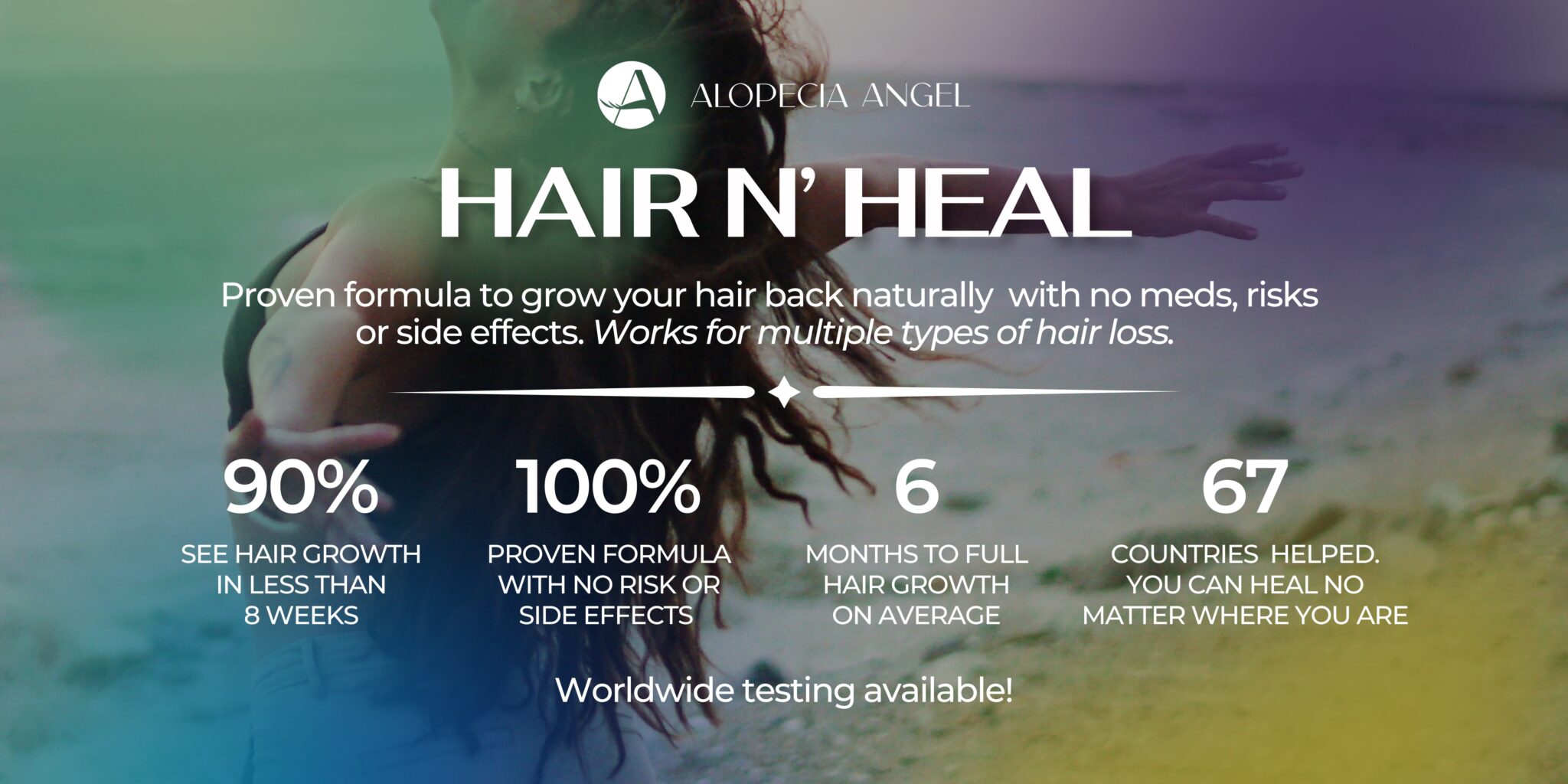
Today we have a very special guest, Johanna Dahlman from Alopecia Angel. She’s the powerhouse empowering people to take control of their hair health. Johanna is a health and high performance hair growth coach, a keynote speaker, and a podcast host to the Alopecia Angel podcast. Through her own struggle with autoimmune alopecia, she now serves as a guiding light for those navigating the challenges of alopecia, helping to reverse and heal. It naturally defying the odds. She serves children and adults, and 90% see hair growth in less than 8 weeks.
In this episode, we’ll be exploring her incredible journey from her own struggles with hair loss, to becoming a beacon of hope for others facing the same challenges. We’ll dig into the root causes of alopecia, discuss effective natural treatments, and uncover the emotional and psychological aspects of living with hair loss. Whether you’re personally dealing with alopecia or simply interested in holistic wellness, that this conversation is packed with insights you won’t wanna miss.
So grab your favorite beverage, get cozy, and let’s drop into this power conversation with Johanna from Alopecia Angel. I love that we are connecting. I wanna tell everyone how we first met, which was actually almost right three years ago now at the Biohacking conference in LA and we were actually at a hair talk and discussion, and I overheard you telling somebody we were just waiting for the speaker to start, and you were saying how you had alopecia. If anyone’s watching this on video or if you’re just listening, your hair is gorgeous. So immediately you were sitting, I think, right next to me, in front of me. I was like: You had alopecia? Like, please explain. And you’re like: Yeah, I hear myself naturally. And I was like: Okay. You have gorgeous hair.
So, whatever you are doing and did for yourself clearly has worked and I’m so excited to share your wisdom with everybody because I think when a lot of people hear the term alopecia, they usually have one vision in mind. But I love to like kind of start off with maybe defining alopecia and what does that mean, and then also does that relate to even if it’s minor hair loss? Would you consider that alopecia as well?
Johanna: So alopecia is the medical term for hair loss. So this is a big umbrella with various types of hair loss underneath it, right? You have the autoimmune type, you have scarring, you have diffused, telogen effluvium. You have different causes and factors as to why we go through hair loss. But the different types of hair loss are numerous, and it’s all gonna look different for each person. There’s no age, race, or ethnicity that defines hair loss. You can have hair loss when you’re a baby all the way up to 80+ years old. It’s really a situation that is concerning, right? For any parent or for any adult going through. It transcends the globe.
I have clients in over 67 countries, and so the same worry, the same concern is across the board. That emotion, that feeling that is tied to hair loss is palpable and you can feel it in an email, you can feel it in a Zoom call, the urgency to heal and reverse it is there as well. And so, you know, when you start kind of peeling back the layers as to what hair loss is, even if it is just a little bit, even if it is quote unquote due to postpartum, due to stress, due to anything that you think it is due to. There’s more there behind it. There’s much more there. It’s, it’s not just one thing.
And even my clients who’ve recovered from like COVID hair loss, it’s not just COVID. There’s more to it. You know, it, there’s always more to it. And what I like to say is that it’s a thousand piece puzzle that we have to put together and each, each person’s puzzle, unique puzzle is gonna look different and that picture is gonna look different, but the journey is the same and the struggle doesn’t have to be there. I think that’s struggling is optional.
Amber: I think that’s such a great point that you bring up. I think a lot of people, if you don’t have a predisposition issue prior to maybe becoming a mother, for many women, hair loss is usually the first time they might really severely experience it can be postpartum if that happens to you. I know, I feel like I didn’t lose as much. I lost some for my first child, but my second child is when it really actually was noticeable. And then I like chopped my hair off because it was like so thin and I was like, I don’t know what’s going on. It never fully grew back until I started using certain adaptogens and we’ll go into, you know, different protocols and so forth.
The COVID hair loss, I think now is affecting so many people. So whether your mother or not, like so many people have had COVID and I didn’t even realize that hair loss was tied to it. I feel like it’s finally sort of coming out because COVID is relatively new to us as a society to see what are those side effects so that people can start connecting the dots. And I think, like you said, it is what do you call it, a maze or a puzzle, like our bodies are a puzzle and so. The first step is sometimes just creating that awareness and realizing what’s even happening, so you then can start putting those pieces together.
I don’t know, for me, it maybe sound silly Growing up when I thought the term alopecia, I just always assumed it was somebody with an autoimmune who was fully bald. Like I never thought of a minor hair loss as a version of alopecia, but I think it’s important to
sort of set the record straight that that is a version of, there are many types of alopecia out there. So it’s not just one type out there.
Johanna: Absolutely, there’s various types. And even when it comes to the term alopecia, I never heard of it until I was diagnosed and the person who diagnosed me was my hairstylist of like 30 years. You know, he’s doing my highlights. He’s spreading open the back of my hair, getting the foils in. He is like: Oh, Johanna, you have alopecia, very nonchalantly. I was like, what? What is that? And I just started googling it in the chair and, you know, I’m crying, I’m tearing up. I can’t hold back because of all this negative information and negative situations that come forth because of having this diagnosis of, of alopecia and the only resource he gave me was like, go see a doctor.
Amber: So your hairstyle told you you have alopecia. What did you do next? Like sort of what was your journey in kind of uncovering? Because you came at it from a real natural standpoint or you figured it out, but after obviously a lot of trials and tribulations.
Johanna: Well, the thing is, just like anyone else, you go see a doctor, right? I think we are trained many ways. Just like in school, you’re trained to raise your hand to speak, you’re trained to be in line and to not cut in line, right? When you’re checking out of, you know the mall or anywhere, any store that you’re in. And so in the same way, should anything be misaligned or out of alignment or out of balance or not normal for you, you go see a doctor and for the most part, you believe what the doctor says. And for the most part, you trust what the doctor says.
At that time I was in transition. I had met my husband and I was already living in Europe at this time, and so I was coming back and forth to the US primarily to get my hair done, primarily to just, you know, get checkups here and there. And then when my stylist told me that I had alopecia, I did go see a doctor in California, I did see doctors in Denver, I did see doctors in the Netherlands, multiple doctors. And depending which doctor it was, it was either zero help to a banquet of pharmaceuticals that I could be taking on a monthly basis to get me hooked and to quote unquote help me with my hair loss.
Before I started looking at everything for one thing, the injections were not feasible for me, because I was living in the Netherlands, so I can’t come on a monthly basis back and forth to LA. So that was one thing that prohibited me from doing the injections. And it was the only place that they were offering me.
Amber: And these are the injections and these are of what per se of medication?
Johanna: Steroid. These are steroid injections. These are immune suppressing injections. And so, immune suppressing, meaning you’re more likely to catch a cold, you’re more likely to catch COVID, you’re more likely to just not be 100% full immune system. It suppresses it. So due to that, and due to the ramifications and side effects, not just of the injections, but also of the creams and anything else that they were offering me, I said no. You know, I was in my 30s and I had just met my husband. We
were not even engaged yet, but we knew we wanted to get married and have kids and do that next step.
That fertility aspect was huge for me because again, you’re in your 30s and your runaway is shortening there. And so due to that, I was just like: No. I mean, I love my hair, but I want the opportunity to be a mom, which is so much greater for me, so much more important for me. That one question always loomed over my head is like, if I always had hair, why now all of a sudden am I losing it? Why now all of a sudden do I have this diagnosis? It just didn’t make sense, especially coming from a really healthy background.
I did Pilates and yoga and I had a personal trainer. I was working out daily. I was fit and trim. I had abs to show for it. I mean, it just didn’t make sense. If you know, on the outside. I looked like the version of health that my family admired. Well, how come I have this situation?
And so trying to figure this situation out, trying to understand it almost backpedal and work backwards is what allowed me to really move forward. And granted, my progress was slow. It took me 4 years. It wasn’t overnight. I knew that the lotions, potions, gimmicks, all those things, all those one size fits all approaches that I like to say, don’t work. The hair, skin and nail supplements don’t work. And they don’t work for a reason. I knew I could go back to normal. I knew I could. I just didn’t have the roadmap, I didn’t have the path, I didn’t have a clear line, you know, it’s like driving in the fog, you know, the road’s there. You just gotta trust and keep going, right? Slow and surely, but you gotta keep going. And so that’s how I felt.
Amber: I guess there’s 2 things. I mean, hair growth is slow. We could talk about, you know, the hair follicle process in the first place. So you have to have patience. But how did you end up, because you have a protocol that you work with. How did you end up creating the protocol to success? Was it a lot of trial and error, a lot of research? Did you have a mentor?
Johanna: I had zero mentors. It was a lot of trial and error. It was a lot of research, it was a lot of biohacking per se, and it was a really trying to understand and self psychoanalyze myself and my situation and putting those pieces together. And so, now it just becomes more prominent, evident and obvious to me. When someone has hair loss and they tell me and I evaluate them, I’m able to hear their story and even their story beyond their story. Then I’m able to put those pieces together for them and be like: Okay,, here’s where you went wrong and this is how we’re gonna fix it, and this is where we’re going.
Amber: In your experience, are there any specific lifestyle factors that you’ve sort of seen a common trend with that can correlate to hair loss, such as maybe stress, diet, hormonal changes? What have you noticed in the last few years?
Johanna: I think all of it is important and all of it has its fair share. It’s hard to say and pinpoint it’s just one thing, because it can’t. Let’s just take autoimmune alopecia as an example. With autoimmune alopecia, you have alopecia areata, which is the round patches, which is what I had. The next level is alopecia totalis, bald head, maybe hair on their body, maybe losing eyebrows, eyelashes, depends, right? You’re in between phases, between totalis and universalis. Universalis is that next step where you’ve lost everything, including nostril hair, including hair on your toes, fingers, armpit hair, body hair, all, all over.
Sometimes you’re in between phases. And even in myself, even though I had iata, I also had telogen effluvium, which is all over hair loss. Wow. And I was losing my eyebrows, my eyelashes, and I had already an extra inch of forehead. Like I have a big forehead already, but this is an extra inch. So I didn’t even realize that my hairline was receding because I was so focused on the back. I had these bald spots, they started connecting. You know, there’s only so much like trying to finagle mirrors and phones and cameras so that you can take pictures and track progress and track to see is it getting worse? Is it getting better? You know, day by day this obsession happened.
It was over four years to I finally felt this veil of symptoms fall off. And I felt clarity for the first time because it’s not just hair loss. Hair loss is also very well integrated with depression, with anxiety, with insomnia, with dry skin, dry eyes, dry hair with, memory lapses, like short-term memory lapses. It also has digestive a component to it. So there’s various components that correlate and come along with having hair loss and you know, I’ll speak from the autoimmune aspect, but I’ve also noticed that there’s multiple symptoms in other clients with other different types of hair loss too. Again, it’s not a one size fits all. It’s not just, oh, we’re all bad with diet because that’s like the same thing for weight loss, right? It’s not just diet, because if it was diet, we’d all be skinny and that’s not the case. Right?
Amber: I think it’s so overwhelming for most of us, you know what you’re saying. It’s not a one size of fits all, which we know our body, everyone’s body is unique. So what if somebody has experienced something similar? What is like a first step somebody should take? Because it does feel like this huge mountain to climb and a lot of times people feel hopeless.
Johanna: I would say start doing your research and start looking at information, and this is where the overwhelming aspect comes in because not only is there an overwhelming amount of information on online, but there’s also misinformation. The misinformation is much more than the true information, and so this is where I personally, this is my mission because I struggled for 4 years. I know now that you don’t have to. I know now that people struggling with hair loss can actually reduce it, get the answers that they’re looking for in less than 8 weeks. It’s not just answers, but also progress. Also results much more than what you would see on the back of a steroid injection box, or Minoxidil or Rogaine or or any supplement. No No one’s gonna get you to where you wanna go with that one size fits all approach.
And so, start with research. I have my podcast, which has over 200 episodes of just amazing content on anything from alopecia, what it looks like, to interviews to clients with different types of alopecia. Including the ones where your doctor’s turning you away because they’re saying that: We can’t do anything for you. I’ve had numerous clients with scarring alopecia, which is hair loss, where your follicle scars on your scalp, kind of like acne scars, right? That some people get, not everyone gets it, but some people do. Normally laser is kind of like the only way to remove your scarring off your face. In the case of your scarring alopecia, it’s multiple misdiagnosis.
But then, then it’s also, you know, your doctor turning you away. When we approach your diet and lifestyle, we tweak it and optimize it. We actually are seeing results even with those, with these, you know, can’t do anything for you type of diagnosis. That’s just it. I feel like we always have the opportunity to do more for ourselves, but a) We have to advocate. b) We have to take action, and c) We need to keep going. Because consistency is key, right? Just like losing weight just because you did the treadmill today for 30 minutes on January 1st. You still have the rest of the year to go to, right? It’s not just one and done. You have to continue to do it.
Amber: Yeah, consistency is a hundred percent key and I think that that’s the hardest thing when it comes to hair loss, because hair growth is slow. Can you discuss, can you tell us how the hair growth cycles work?
Johanna: So in terms of hair growth, you know, if you were to Google this and Google would say: you’ll see hair growth up to half an inch a month. And I would like to say that I’ve defied the odds, and you can also defy the odds. Like, I’m not a unicorn. Anyone can do this. Just like I’ve healed my autoimmune alopecia and it’s been over 9 years that. I don’t have to worry about this. This is even after COVID, this is after a pregnancy at 40, this is after stressful times, you know, moves continental moves from one country to another, and still it hasn’t come back.
And it’s because I know how to control my health, my hair, and optimize my hair growth. So at this point, I actually have a reel out where I’m showing you how much hair growth I have, and it’s an inch a month on a consistent basis. I’m in my 40s, so it’s just like, how can I track this? Well, I get highlights. I’m not a true blonde, so for those who don’t know, I’m not a true blonde. So you can see my roots and my grays of course, but you two inches, you can see my roots and I track this, you know, and it’s every 2 months and my hairstylist is measuring it, how many inches she has to cover. And it’s normally 2 inches every 2 months, you know, every 3 months that I’m going back to get my hair done.
And so the cycle has a growth phase, a resting phase, and a falling out phase. And so each phase has its own time, but that doesn’t mean that we can’t optimize. Now we are hearing of people who are in their 60s with zero medications, zero prescriptions, zero health ailments. So why is it that some people in their sixties have bad health and others are thriving, right? We can choose and that choice leads us to better diet in lifestyle optimization for us, right? Because we’re all gonna look different. And you know, a lot of questioning happens to like: So why is this different for that person versus this
person, even though we have the same type of hair loss, let’s say it’s female pattern baldness, or let’s say it’s COVID, whatever it is that you wanna label it.
I’ll say, is that because everyone is different? I’ve had clients who are breastfeeding, so I need to help them be able to produce milk, but still heal and reverse their hair loss. The same with people who have their thyroid completely taken out before even doing my program, because they’ve had thyroid cancer, so they’re on meds for thyroid for life. And so if you’re on medications, let’s say like this one client that I’m thinking about, well that is gonna look different than the lady who’s breastfeeding. That’s gonna look different than the child who’s 5 years old, who’s never even hit puberty yet that’s gonna look different than the woman who’s in menopause. That’s gonna look different than you and I who are in our 30s-40s we’ll just put that bracket, so, you know what I mean? It looks so different.
Amber: When you’re working with clients, do you have like a certain pillars that you’re working with? Because I know there’s so much to change and everyone’s so different, but can you give us sort of like a top side level to give people an understanding of sort of the different elements that are at play here?
Johanna: Absolutely. So diet and lifestyle are the two big buckets that I’m looking at. And granted the diet portion is not a one bucket. You have to eat this, this, and this. No, this, again, is tailored to you. because I have clients who are Halal, vegan, vegetarian, people who are meat eaters, people who don’t eat fish, people with allergies, people with you know, who only eat , certain things but not other things. And so, you know, the 5 year old diet per se is, is so different than the 50 year old diet. It just looks so different. And then when you add on, let’s say, whether you’re kosher, whether you’re Halal or whether you fast for Ramadan or any of these things, I take it into consideration and, you know, we tailor it to you because it has to be. It’s custom.
And this is where I think medicine fails us because it’s not customized, it’s a one size fits all. And then you see all these problems later on. So for example, Ozempic is a big one, right? Ozempic, you lose weight like this, but it doesn’t work for everybody, even though maybe for 90% it works for everybody. But now you’re also seeing hair loss due to ozempic. You’re also seeing blindness due to ozempic.
Again, medicine and healthcare as we know it, as we see it doesn’t have the time, the bandwidth, the resources, or the money to spend time with you and to say: Okay, this is the approach we’re gonna do. We’re also gonna tailor it to your ethics, to your values, to your religious beliefs, and everything else that goes along with it so that you can thrive and see your hair growth. They’re not doing that.
Amber: Oh yeah. No, definitely not. We’re not built like that unfortunately. You know, I always like to look at things that we are doing in our daily lives. You’re saying diet and lifestyle is one of them. Are there things that like people actually are putting on the hair that they may not realize that can be causing some hair loss? You know, I live in Miami, so tons of people do keratin. Back in New York, people did a lot of Brazilian blowouts,
flat irons. Could you tell us a few things that might be impacting somebody’s hair and they may not even be connecting the dots to realize that they’re innocently putting something on that actually could be detrimental.
Johanna: There’s a lot of things. So I have actually free PDFs on my website. One is medications. Let’s evaluate your medications. And so in one of these pre PDFs, it lists all the medications where the side effect is hair loss. So let’s start there. Are you taking something that could be causing your hair loss? Something that’s completely unrelated, you know, and a lot of times it is. The other thing is like, yes, there are tons of hair products that do cause cancer, that are known carcinogens, but that also create hair loss.
I know that the dry shampoos, the spray dry shampoos are one of them. Again, it’s in my free PDF, I know the keratin treatments are another one.
Amber: Is there part about scalp health now? I’m getting inundated about scalp health. It’s having a moment.
Johanna: That too, but the thing is, it’s like if you start thinking about it. If you use, and let’s just go back to skincare for a second. You know, if you were to use multiple, let’s say, 5 or 6 products on your skin, you might get a reaction, right? It might get red, it might get a little, I don’t know, blistery, or you might have some sort of swollen eyes because our skin isn’t adapted to have so many products and on top of it, a lot of products actually don’t work together, right? Even if it’s from the same line or carrier, they don’t work together.
Lo and behold, these products are actually working against each other, creating hair loss. So that could be another thing. But then there’s also lawsuits and because of politics or economics or other things going on in the world, it’s not gonna be a headliner. So I actually keep track on this free PDF of hair brands and products that are either have had lawsuits or in the middle of lawsuits or have known cause to, you know, cause hair loss to thousands of people. Because a lot of people are not gonna raise their hand for nothing.
Amber: Yes, no, I love that you mentioned that and your website is a wealth of information. We will have a link in the show notes. Yeah, I didn’t realize that there were so many lawsuits going online, so I think education, like you said number #1 to educate yourself. I think that we just have to recondition ourselves. We’re so used to in the Google era of outsourcing, outsourcing, outsourcing the knowledge, but really we need to start utilizing Google, do some deep dive research, read real medical journals. Be careful of the websites that you’re choosing to then empower yourself to know like what is the next step.
It’s so interesting what you’re saying about keratin because I had this whole philosophy last year. So my hair, I have a lot of fine thin hair and after my daughter. Hormonally, I think everything shifted and my hair just never fully grew back. But in 2019 it was like
doing pretty good. Then COVID happened. I’ve had COVID 3 times, and last December I had a huge hair shed moment. And I don’t know if it was due to like high intense stress, who knows if I had COVID again and didn’t even know. But I really think it was due to stress and it was a panic moment for me of like: Oh, I mean clumps of hair worse than even postpartum. And I was like: What is going on here?
So I’ve sort of been on this like crazy hair journey just to get smart for myself and understand what’s going on. I didn’t even find any literature yet about the keratin until I just saw it on your site. Keratin is new for me from moving to Miami because it’s so humid here and all the hairstylists, every single person pushes keratin on you and says to do it and it’s fine and it’s helping. Meanwhile, I didn’t realize there’s formaldehyde in some keratin, so you wanna check your ingredients of what keratin you’re using are using keratin. And I felt like my hair was getting worse and I stopped using keratin on my own. Maybe just trusting my intuition and who knows if that was, that wasn’t the only reason for some of my hair loss, but maybe that was part of the reason also. Who knows? I’ll never know.
I have since stopped keratin and on like a hair growth journey. And it’s just interesting that there’s so much we don’t know out there, and we have to really take a minute, take a step back and say: Ok, what am I using every day? What is your shampoo practitioner? If you’re putting stuff like you were saying on your scalp, what are your ingredients? And read those labels again. I always say: Look at the side effects, assume that that’s gonna happen and if you’re comfortable with that, proceed forward. And then if you’re not comfortable with that, find an alternative solution. Because people just, you know, we get so many, if you’re watching TV, I mean there’s a million ads on TV and it says, someone said one of the last things that they say is a potential side effects sometimes could be death. I mean, it’s pretty serious, but we sort of just…
Johanna: It’s black box warnings.
Amber: Yes. I mean, it’s pretty wild. So I definitely suggest anyone listening, please check out her website, so many things going on there and lots of brands that may or may not be in your bathroom right now, that there are some big lawsuits happening. In terms of like reversing and managing, how like long does it take so somebody can understand. You know, you have to be patient. You know, it doesn’t happen, we’re such a instant gratification in society. I think that is the hardest part when it comes to hair loss. It is.
Johanna: It is. It is. And that’s why, you know, there are popular methods like Rogaine or minoxidil, but I will say that one tip I could give is like anything that topically that you’re using, it’ll eventually backfire or stop working. You can see this in terms of, let’s say those shampoos, even the conditioners, like if you’re loyal to one brand, don’t be loyal. I think that’s, that’s been the key to my success, has never been loyal to any one brand because the more you switch things out. The less your hair gets complacent. And in terms of topicals, like Minoxidil, Rogaine, again, like I’ve heard it over and over again.
I never went that route, but I’ve heard it over and over again that a) The side effects are there. b) It’s not meant for you to be on it lifelong.. Like think about that. We’re not supposed to be on medication long term. And it is a medication, whether you’re taking it orally or topically or if it’s just the foam like medications coming into your body, so think about that. For me, again, it was fertility and a lot of times parents, unbeknownst to them. They take their kid to the dermatologist and your kid can range from, you know, newborn all the way to 25 years old because for some parents, you know, your baby’s your baby even at 25. They’re taking their kid to the dermatologist, the dermatologist is giving them, depending male or female, certain medication for the alopecia. But lo and behold, that also causes and can cause erectile dysfunction.
Amber: Wow.
Johanna: It can also, cause I know these are big things for a 20 some year old for a 19-15 year old and the parents have no awareness. That’s like the biggest thing is that, you know doctors are giving out medications like candy and not having enough time or the courtesy to even give them a printout of like: Hey, this is what’s going on potentially with the side effects. And so again, this is where you’re left to advocate for yourself. This is where you have to see your doctor. Not as the end all be all, but more like a consultant of sort.
Just kind of like if I were to look at a plumber and get one quote from one and 2 and 3 plumbers, you know. Still keep getting more quotes. Still get more information out there before you decide on which plumber, on which doctor, on which method, on which strategy you want to go with. And that’s how I see anyone today really.
Amber: We share a very similar mindset. I always say, you know, when it comes to your wellness that you know, treat it like it’s a business. You know, for your business, you price out 3 to 5 people. So get 3 to 5 different opinions and come in curious. Come in with questions, be prepared, don’t just show up and say: Hey, I’m here. Like walk in the door with an actionable plan of answers that you wanna get and seek out different opinions. And then from there you’ll decide what feels the right fit for you or for your family. Now, if somebody is struggling with hair loss, what is the right type of doctor? because most people’s first step is going to see the doctor that they even look to go to ’cause
Johanna: Well, normally you’re going to your GP and then from your GP you’re going to your dermatologist. That’s the normal, conventional way of doing things. I would say that that’s a black hole. I’ve actually started training beauty schools and cosmetology schools, including Paul Mitchell, because I want the estheticians, the stylists, the new hairstylists that are coming out and graduating to understand that when they learn about alopecia, which literally it’s a sentence in their book of cosmetology. That’s it. It’s literally one sentence, a paragraph if that, and they are so willingly able to diagnose you in the chair, like many people are just like myself, be diagnosed in the chair.
But yet they’re saying: Go to the doctor, go see your doctor. Well, that’s a black hole because your doctor is only good for surgeries or medication. So if you don’t want surgery, and if you don’t want medication, that’s not the route you’re going to. Hopefully you’re looking for a third alternative, and that would be, you know, come to somebody like me who has proven results. So that’s one thing I would be asking. Any doctor, any dermatologist. Okay, so you’re offering this method, you’re offering this medication, you’re offering this, and where are the results to show for it? Where are the people with my same type of hair loss, who have seen hair growth in X amount of time or in certain amount of time, and who’s had long-term success with it? Show me the money, like show me the proof of it. And that’s, as you know, someone advocating for themselves. Those are the type of questions I’d be asking.
Going back to your original question of like how long hair growth takes. 90% of my clients see hair growth in less than 8 weeks. Whether you’re straight up bald and you’re starting from that point, or whether you’re losing clumps of hair. Hair shedding stops anywhere from 2 to 6 weeks. Amber, I can’t believe you didn’t come to me, because…
Amber: I know.
Johanna: I would’ve given you an evaluation and you could start to see your blind spots. Because that’s the problem. If you don’t know where you went wrong, you’re gonna commit those mistakes again and again and again, just like in a relationship. But this relationship is not with you and a partner, it’s you with yourself and your hair. This is why it’s so important to understand your blind spots where you’ve gone wrong. And more than likely, I’m telling you, it’s more than 5 factors. It normally is more than 5 factors. It’s a combination. It could be also a season, right? As any mom would know. It could be a season of situation, but there’s always more aha moments on the other side of the evaluation.
Amber: Yeah, I think it’s so important. I’m so grateful to know you and have met you, especially for women. I didn’t realize now I’m in this perimenopause state in my 40s that 50% of women in menopause lose their hair. And I always am like: Well why didn’t anyone warn us about this? And so my messaging is really to help warn women like it might be coming. So kind of tighten up your habits now to hopefully minimize whatever might be coming down the road. Sometimes you just don’t know. And the worst thing is to get into this moment where you’re kind of in crisis mode. Because when you’re in crisis mode, sometimes people aren’t able to think so clearly and take the time and do the work that is needed here. So hopefully, you know, even just starting with looking up your website, you have a lot of free tools and information on there. So I just suggest everyone to go check out your website. We’ll have it in the show notes.
This has been such a enlightening conversation and hopefully, you know, leaving everybody, obviously it can be overwhelming, but just know that there is hope and there is a way, and that you don’t have to be tied to a doctor. I think setting people free from feeling like endless doctor’s appointments where people have no time to begin with. So being able to do something at home on their own. I think putting the power back into
your own hands, there’s nothing better than that. Just to, you know, close out the conversation. What is one drop of Wellness wisdom you’d like to leave with our listeners today?
Johanna: Regardless of how much time has passed, how long you’ve had it, wherever you live, what race, ethnicity you are. You have the power to heal and reverse this. This is your birthright. If you want it, it’s yours and you have to have the desire. If you have a beating heart and you want this, you can have it. Just like you wanna learn how to play the guitar. You wanna learn French, you want to travel the world, you want to climb Kilimanjaro, you can do all these things. You just have to believe and take action.
That’s what I always say. You have to believe and take action because that’s the key to success, right? Believe and take action and keep going, and keep going and keep going.
Amber: I love that. Thank you so much and thank you for joining us on The Well Drop today. Please like, subscribe, send this to a friend who may need to hear this most. Thank you, Johanna
Johanna: Thank you. Appreciate you.